
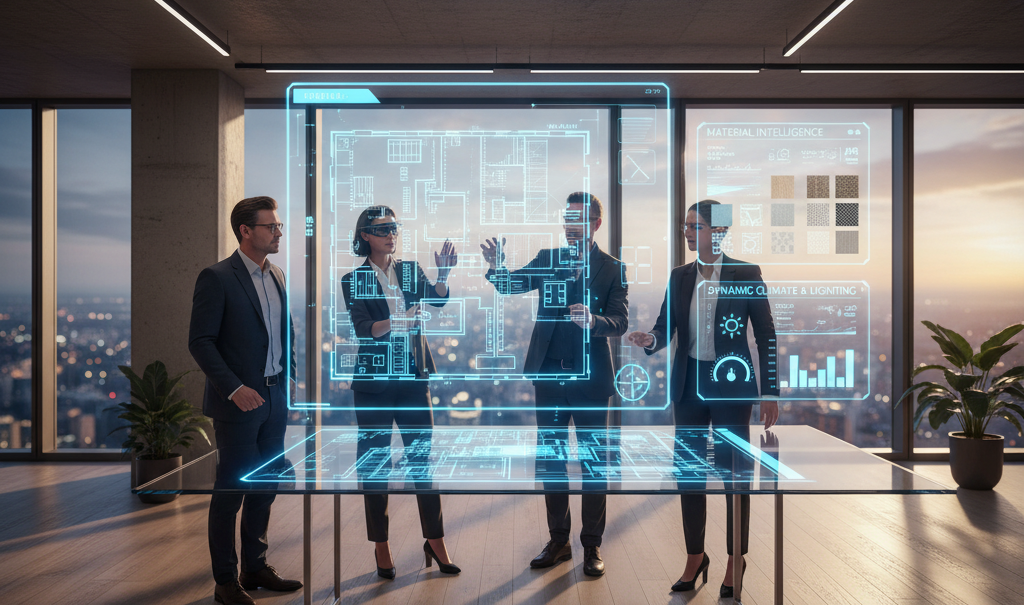
AI in commercial design is redefining how spaces are planned, visualized, and maintained. From generative layouts to predictive optimization, architects and designers are using artificial intelligence to create smarter, sustainable, and data-driven commercial spaces.
The New Era of AI-Powered Design
AI is no longer just a futuristic concept — it’s an essential collaborator in today’s design studios. Modern AI software can analyze client requirements, site conditions, and building codes to automatically generate multiple optimized floor plan options in minutes. This drastically reduces the time spent on preliminary sketches and allows designers to focus on innovation and aesthetics.
Generative design platforms like Spacemaker, TestFit, and Autodesk Forma use machine learning to simulate countless configurations of interior layouts. These tools evaluate lighting, airflow, accessibility, and material efficiency to recommend designs that balance beauty and functionality.
Visualizing Materials and Interiors in Real-Time
Another breakthrough lies in AI-driven visualization tools. Designers can now upload floor plans and instantly view realistic 3D renderings with AI-suggested color palettes, lighting, and materials. Platforms like Midjourney, Interior AI, and RoomGPT enable faster decision-making and better client collaboration.
By using AI-generated imagery, commercial designers can test multiple design themes or visualize the impact of natural light throughout the day — tasks that once took hours of manual rendering.
Post-Occupancy Optimization: Smart Sensors and Predictive Maintenance
AI’s role doesn’t end once a building is complete. The rise of AI-powered sensors is transforming how spaces operate post-occupancy. These intelligent systems monitor temperature, lighting, and occupancy levels to automatically adjust the indoor environment for comfort and energy efficiency.
For instance, predictive algorithms can detect when a room is underused and reduce HVAC output, cutting energy costs. Similarly, AI-based predictive maintenance tools analyze sensor data to forecast when lighting systems or air conditioners need servicing — minimizing downtime and extending equipment life.
Data-Driven Space Optimization
Using AI for predictive space optimization, companies can study real-time occupancy data to understand how employees use different zones — from conference rooms to lounges. This information helps facility managers reconfigure layouts to improve workflow, reduce congestion, and enhance productivity.
The integration of Internet of Things (IoT) devices and AI analytics is giving rise to truly adaptive workspaces — offices that learn and evolve based on user behavior.
Future of AI in Commercial Design
As AI continues to advance, its integration with augmented reality (AR) and digital twin technologies will redefine the commercial design process. Designers will soon be able to simulate entire buildings before construction, optimizing every decision from sustainability to human comfort.
The future of commercial design lies in human-AI collaboration — where technology handles data and optimization, and designers focus on creativity, storytelling, and experience.
Frequently Asked Questions (FAQ)
1. How is AI used in commercial design today?
AI assists designers by generating optimized floor plans, visualizing materials in 3D, and managing building systems post-occupancy through smart sensors.
2. What are generative design tools?
Generative design tools use algorithms to produce multiple design variations based on input parameters like space, lighting, and functionality.
3. Can AI improve energy efficiency in buildings?
Yes. AI-powered sensors and predictive analytics optimize lighting, HVAC systems, and occupancy patterns to reduce energy consumption.
4. What is predictive space optimization?
It’s the use of AI and data analytics to monitor how spaces are used and reconfigure them dynamically to enhance productivity and comfort.
5. Will AI replace human designers?
No. AI enhances human creativity by automating repetitive tasks, leaving designers free to focus on innovation, emotion, and user experience.
Artificial Intelligence is not replacing designers — it’s redefining the design process. From creating smarter layouts to managing energy-efficient environments, AI is helping commercial designers build spaces that are beautiful, adaptive, and sustainable. As technology evolves, the collaboration between human creativity and AI intelligence will shape the future of design innovation.
 , All Rights Reserved