
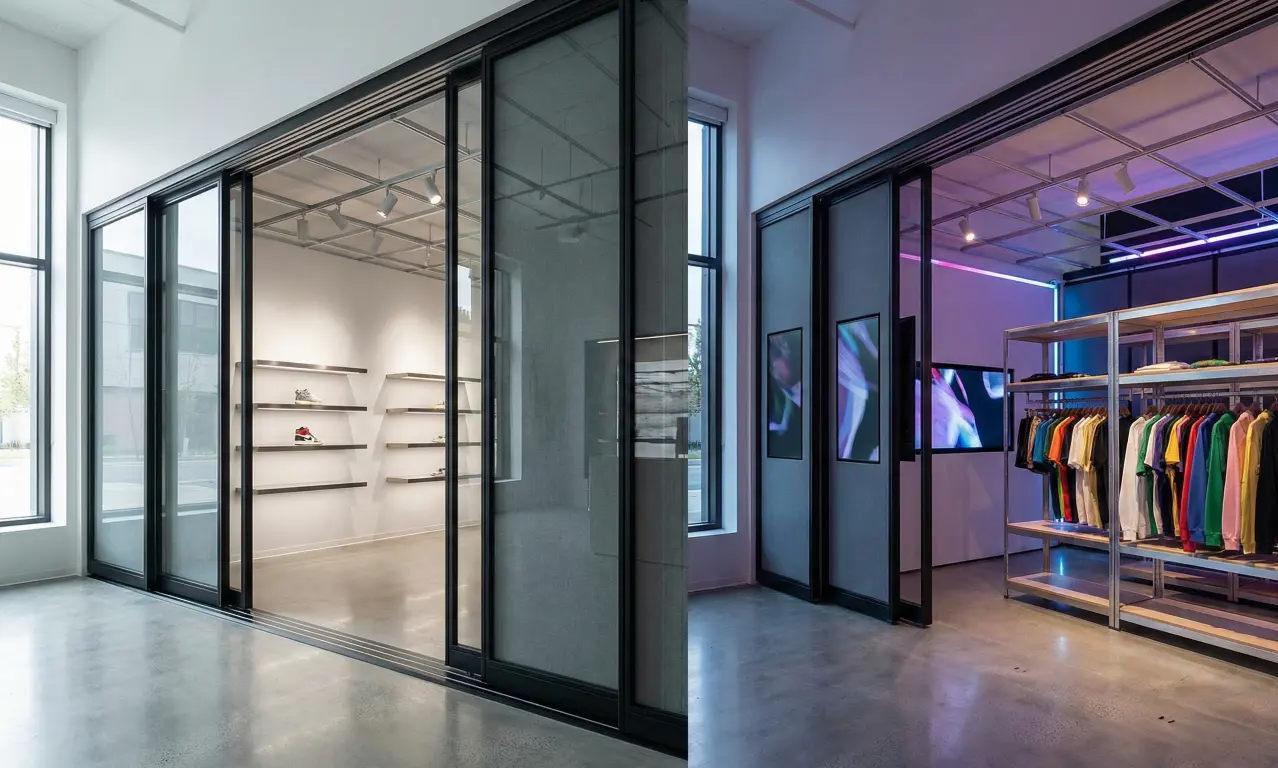
As global retail undergoes a rapid transformation, brands are replacing long-term static fit-outs with agile, modular interior systems that can be redesigned within hours. In 2025, movable walls, electrified fixtures, and pop-up–ready layouts are redefining how commercial spaces are imagined. Design firms—including DeriveIt Innovations—see this shift as essential for brands seeking speed, sustainability, and higher ROI in an experience-driven marketplace.
The New Face of Retail: A Shift Toward Modular Store Design
Retailers across fashion, lifestyle, and luxury sectors are demanding store formats that can evolve as quickly as their product cycles. For design teams, this means prioritizing adaptability, efficiency, and material longevity.
Movable Walls and “Plug-and-Play” Architecture Gain Ground
Movable wall systems with concealed ceiling tracks are rapidly replacing traditional drywall partitions. These systems—available in glass, metal, acoustic felt, and other high-end finishes—allow retail teams to create VIP zones, open event spaces, or restructured customer pathways in minutes rather than weeks.
Electrified Magnetic Display Panels Transform Merchandising
Magnetically powered wall systems are emerging as a major innovation. Retailers can attach illuminated shelves or digital displays anywhere on conductive panels without wiring or drilling. This flexibility allows complete merchandising refreshes in under 20 minutes.
Why Retailers Are Investing in Flexible Store Formats
Better ROI Through Rapid Layout Changes
With weekly and monthly product drops becoming the norm, brands require layouts that generate hype, manage crowds, and keep the experience fresh. Flexible stores reduce renovation costs and allow more frequent visual changes—directly improving ROI per square foot.
Growth of Pop-Ups and Collaborative Retail Models
Retailers increasingly lease micro-spaces to small brands, F&B kiosks, and weekend pop-ups. Modular layouts support this trend with temporary plug-in zones, mobile fixtures, and ready utility access that make collaborations seamless.
What Team DeriveIt Innovations Thinks About This Retail Shift
DeriveIt Innovations, a forward-focused design and engineering firm, says the modular retail revolution aligns perfectly with what modern brands expect from physical spaces.
According to the team, three major insights define the future:
1. “Flexibility is now a foundational design requirement—not an upgrade.”
The team notes that earlier, modularity was considered an add-on for premium stores. In 2025, it has become the baseline expectation for retailers who constantly adapt to fast-changing consumer behaviour.
2. “Digital and physical retail must now be designed as one ecosystem.”
DeriveIt Innovations believes that as brands operate across social media, e-commerce, and physical stores, interior design must support quick content creation, live events, influencer interactions, and digital-forward product displays.
3. “Sustainable modular systems will define long-term brand value.”
The firm emphasizes that reusability, low waste, and relocation-friendly fixtures are becoming key decision points for clients. Modular interiors allow brands to scale responsibly, without repeated demolition and reconstruction.
In the team’s view, the future belongs to retail spaces that behave more like adaptable platforms than static stores.
Sustainability Becomes a Core Benefit of Modular Retail
Traditional retail renovations generate significant construction waste. Modular designs support circularity—fixtures can be dismantled, transported, and reused across different locations.
Environmental advantages include:
-
Lower waste in remodels
-
Reduced carbon footprint during relocation
-
Longer material lifespan
-
Budget efficiency over 5–10 years
Global Adoption: Luxury and Fast-Fashion Brands Lead the Movement
Premium brands are now designing stores that can be dismantled, shipped, and reassembled in new locations. This approach accelerates expansion and reduces setup costs across markets like Europe, Southeast Asia, and India.
The Future of Retail Belongs to Flexible Store Design
Modular interiors mark a pivotal shift in how brands approach physical retail. As the need for quick transformation, sustainability, and experiential shopping grows, firms like DeriveIt Innovations believe the winning strategy is clear: build stores that can evolve overnight.
The next wave of retail will be defined by stores that aren’t built once, but built to adapt—continuously.
Frequently Asked Questions (FAQ)
1. What is modular retail design?
A flexible store design approach using movable walls, detachable fixtures, and plug-in systems that enable quick layout changes without major construction.
2. Why are brands embracing modular layouts?
They offer faster transformations, lower renovation costs, better crowd management, and higher ROI through frequent visual updates.
3. What role do magnetic display panels play?
These panels allow retailers to attach powered shelves or screens anywhere on a wall—without wiring—making merchandising highly flexible.
4. How does modular retail support sustainability?
It reduces waste by enabling stores to reuse fixtures across multiple locations rather than rebuilding from scratch.
5. Why does DeriveIt Innovations support modular design?
The team believes flexibility, phygital integration, and sustainable material use are now essential for future-ready brands.
 , All Rights Reserved